Language


 WhatsApp

Henan Enda New Material Co., Ltd


Choosing the wrong insulation foam can lead to poor acoustic performance, unnecessary material costs, installation problems, or compliance issues. For building-material buyers, the decision should not be based on price or material names alone.
Melamine foam is a strong option to evaluate when a project requires lightweight acoustic absorption, with additional thermal-protection or fire-performance requirements assessed against the relevant product data. Polyurethane (PU) foam also has its place, particularly rigid PU in thermal insulation applications. However, buyers should compare the actual specifications, intended use, and supporting test documentation before deciding which material fits their project.
As a melamine foam manufacturer, Henan Enda New Material Co., Ltd. supplies melamine foam and related sponge products. For buyers sourcing materials for acoustic products, insulation components, or customized applications, understanding the following differences can help prevent costly purchasing mistakes and identify the right product from the start.
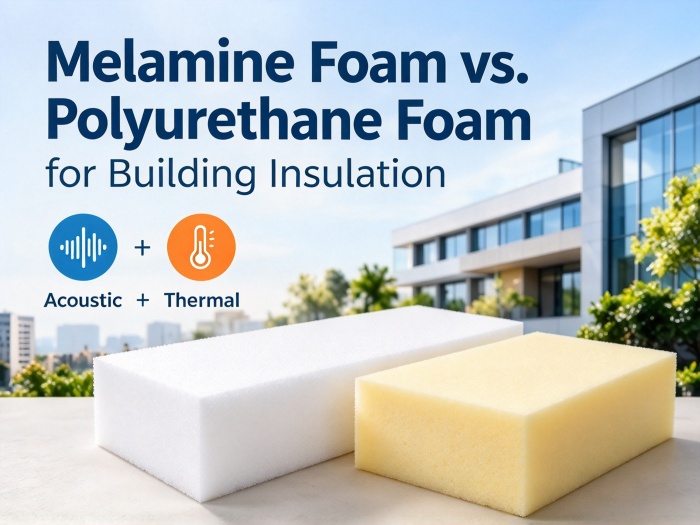 Melamine Foam vs. Polyurethane Foam
Melamine foam is a lightweight, open-cell material with a porous structure suited to sound absorption. For applications where reducing reflected noise is important, it can be a practical material to evaluate. Depending on the specific grade and supporting test results, buyers may also consider it for applications where low weight and certain fire-performance requirements matter alongside acoustic performance.
Polyurethane foam covers several different product types. Flexible PU may be used in acoustic applications, while rigid PU is widely used in building thermal insulation systems. The important point is that buyers should compare the right grades for the same application—not compare two material names as if each represented one standard product.
Before requesting quotations, clarify whether your project primarily needs sound absorption, thermal insulation, or both. This first step narrows the product options and reduces the risk of paying for specifications that do not solve the actual problem.
One common purchasing mistake is assuming that any foam marketed as acoustic insulation will deliver the required sound-control performance.
Melamine foam and suitable acoustic-grade PU foam can both absorb sound, but results depend on thickness, density, pore structure, frequency range, and installation conditions. A product that performs well at one frequency may not deliver the same results across the full range required by a project.
There is also an important distinction between sound absorption and sound insulation. Absorption reduces reflected sound inside a room or enclosure. Sound insulation concerns how effectively a wall, ceiling, floor, or complete assembly limits sound transmission between spaces. Selecting an absorptive foam alone does not guarantee that a building assembly will meet a sound-insulation target.
To avoid a mismatch, ask suppliers for:
Sound absorption data across relevant frequencies, rather than a general claim that the material is “high-performance.”
NRC data where applicable, together with the test method and test conditions.
Results for the actual product grade and thickness being quoted.
Installation or mounting details that allow a meaningful comparison with your intended application.
For buyers evaluating melamine foam, these checks help establish whether the proposed product is suitable for the project’s acoustic requirements before a bulk order is placed.
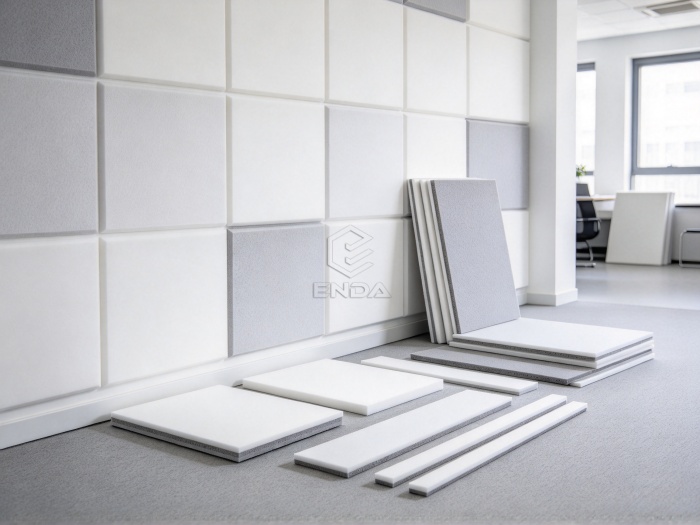 Melamine foam offers excellent sound insulation
When thermal insulation is the primary objective, thermal conductivity is one of the key specifications to examine. Under comparable test conditions, a lower thermal conductivity generally means better insulating performance at the same thickness.
Rigid PU foam is commonly selected for building applications where efficient thermal insulation is the main requirement. Melamine foam should instead be assessed against the specific thermal demands of the intended application, particularly where acoustic absorption and low weight are also important.
Avoid comparing thermal conductivity figures without checking the test method, test temperature, product grade, density, and thickness. Differences in these conditions can make figures misleading when used for procurement decisions.
Ask suppliers to provide a technical data sheet (TDS) and relevant test reports. Then compare the documented performance with your design requirements, including the thickness available for installation. This is more reliable than choosing a material based on a broad statement that it offers “excellent insulation.”
Fire performance can be a decisive factor in building-material procurement. Melamine foam has inherent flame-retardant characteristics, but this does not mean every product automatically meets every building code or fire classification. PU foam performance also varies by formulation and grade.
Before purchasing, verify the applicable fire classification, test standard, and whether the documentation covers the foam itself or the complete installed assembly. Confirm that the evidence is accepted for the target market and intended application.
Buyers should also check:
Operating conditions: Is the material suitable for the project’s temperature range and environment?
Moisture exposure: Does the intended location require additional protection or a different construction?
Installation compatibility: Can the foam be securely installed alongside the project’s other materials?
Dimensional requirements: Are the proposed thickness, dimensions, and tolerances suitable for the finished component?
These checks are especially important when sourcing customized foam. A material that meets the basic performance target may still create problems if its dimensions, mounting method, or environmental suitability do not match the final application.
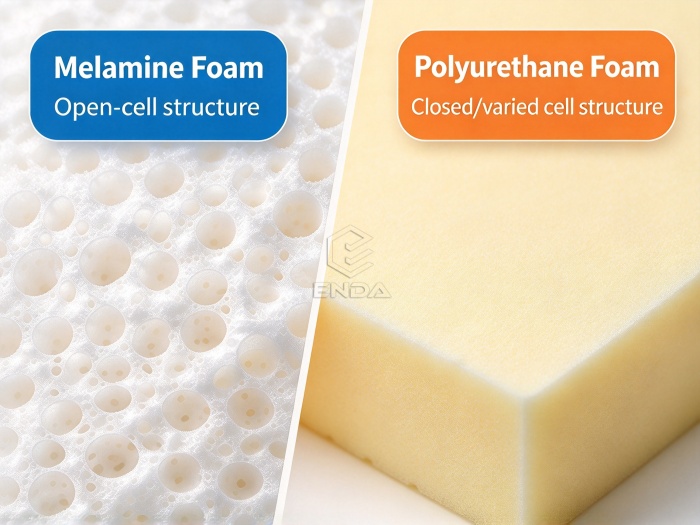 Two types of foam each have their own distinctive characteristics
The lowest unit price is not always the lowest-cost solution. A product that fails to meet performance requirements can lead to redesign, replacement, installation delays, or additional testing.
Use the following decision criteria when comparing melamine foam and PU foam:
| Your project requirement | What to verify before purchasing |
|---|---|
| Acoustic absorption | Frequency-dependent test results, thickness, density, and mounting conditions |
| Thermal insulation | Thermal conductivity, test conditions, and required thickness |
| Fire-sensitive application | Relevant product-specific reports and local compliance requirements |
| Limited installation space | Performance achievable within the available thickness |
| Customized components | Dimensional tolerances, processing feasibility, and sample approval |
| Cost control | Material price, processing, installation, compliance, and replacement risks |
If acoustic absorption and low weight are central to the application, melamine foam deserves a place on your shortlist. If the project is primarily focused on thermal insulation using a rigid insulation system, rigid PU may be the more appropriate candidate. Where several requirements apply together, compare the actual grades and supporting evidence before making the final decision.
The goal is not to buy the cheapest foam or select a material based on a generic ranking. It is to source a product that meets the project requirements without unnecessary cost or avoidable technical risk.
Buying directly from a manufacturer can make it easier to discuss product specifications, customization requirements, samples, and technical documentation before confirming an order. However, buyers should still verify the capabilities and evidence offered by each supplier rather than relying on the manufacturer label alone.
Henan Enda New Material Co., Ltd. supplies melamine foam and related sponge products. Buyers considering ENDA materials for building acoustic or thermal applications should identify their target performance, dimensions, installation conditions, and destination-market requirements so the relevant product grade and documentation can be evaluated.
Before placing a bulk order, request the applicable TDS, supporting test reports, dimensional specifications, and a sample where appropriate. If a supplier presents an application case, check that its product grade, use conditions, and reported results are relevant to your project.
To request a product assessment or quotation from ENDA, prepare the following information:
Intended application and required performance.
Required foam dimensions, thickness, and density, if specified.
Operating environment and installation method.
Applicable fire, acoustic, or thermal standards.
Estimated order quantity and customization requirements.
With these details, the supplier can assess the request against the available product specifications instead of providing a quotation based on incomplete information. This gives buyers a more practical basis for comparing options, confirming suitability, and reducing procurement risk.
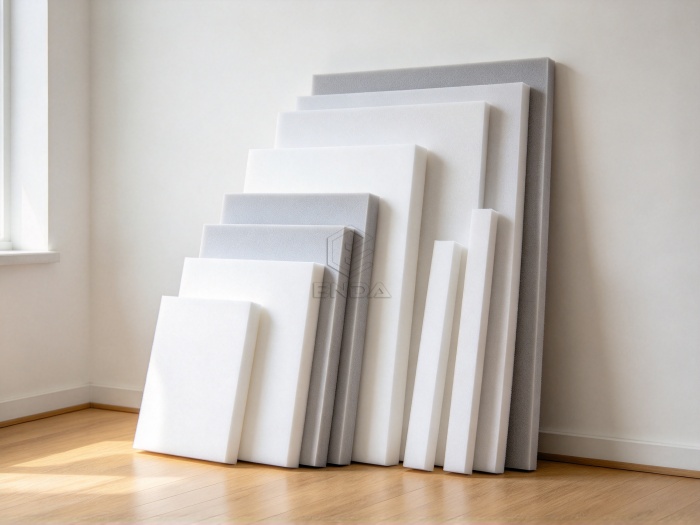 Melamine foam is often cut into sheets
Start with the intended application and required performance. Then verify the proposed grade, thickness, relevant test reports, fire requirements, and installation conditions. A general product description is not enough to establish suitability.
No. Density alone does not establish acoustic performance. Buyers should compare tested sound absorption across the relevant frequencies, along with thickness, material structure, and mounting conditions.
Where practical, yes. A sample can help verify dimensions, appearance, processing suitability, and compatibility with the intended component. It does not replace laboratory testing or compliance documentation when these are required.
Ensure each quotation refers to a comparable product grade, dimensions, thickness, density, customization scope, and documented performance. Also compare packaging, quality requirements, and any testing or compliance documentation included in the offer.
Request the product-specific TDS, relevant acoustic or thermal test reports, applicable fire-performance documentation, and dimensional specifications. Confirm that the documents relate to the actual grade being quoted and are suitable for the project’s target market.
(Your information is only used to communicate between us and will not reveal your privacy)